
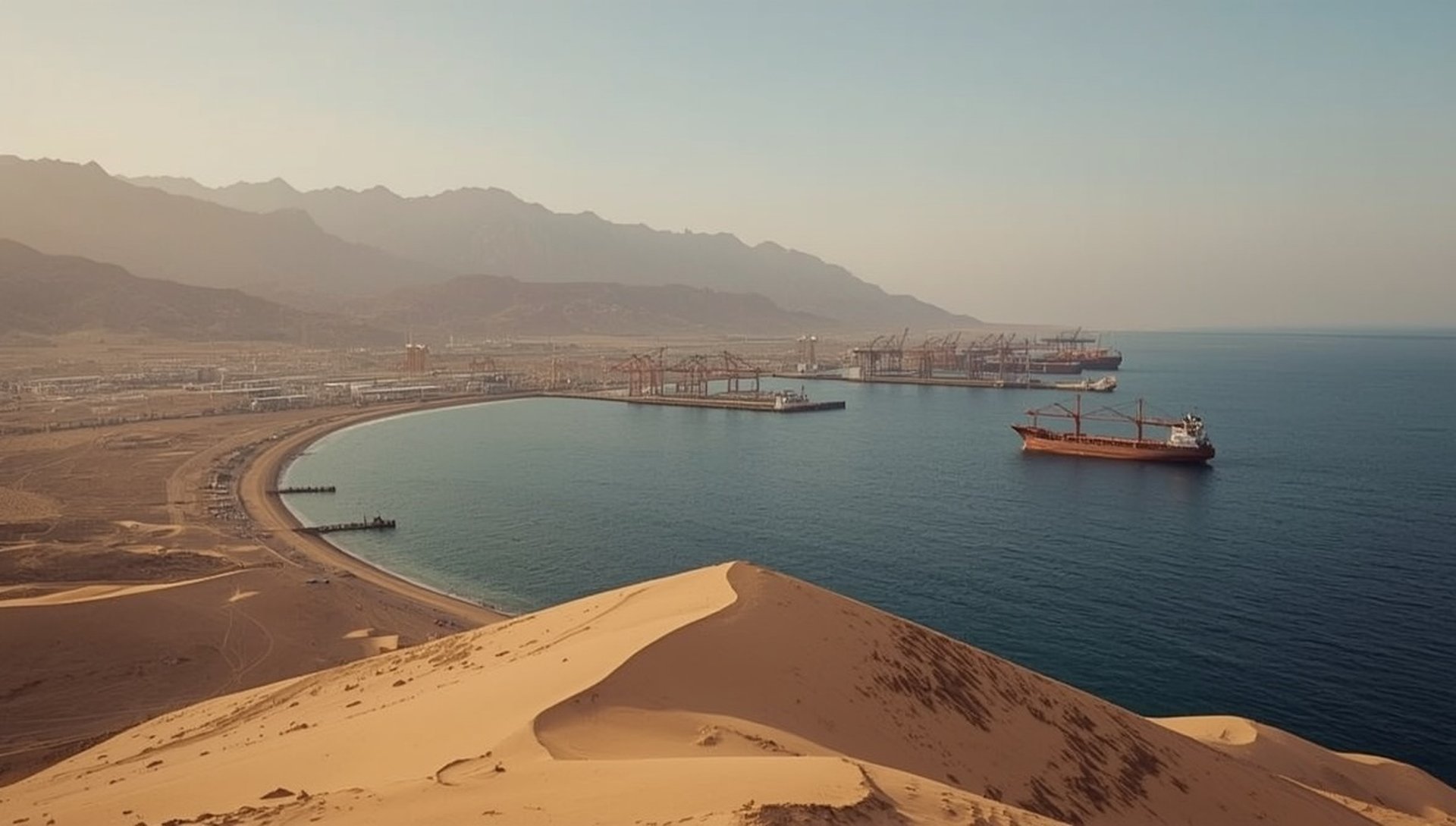
Oman has quietly become one of the most investor-friendly jurisdictions in the GCC. A modernised Foreign Capital Investment Law, four large special economic zones, and one of the lowest corporate tax rates in the region make the Sultanate a serious alternative to Dubai or Riyadh for regional headquarters, industrial projects, and logistics operators.
Can Foreigners Own 100% of a Company in Oman?
Yes. The Foreign Capital Investment Law (FCIL), enacted under Royal Decree 50 of 2019 and effective from 1 January 2020, abolished the requirement for an Omani co-shareholder in most sectors. Foreign investors can now hold 100% of a mainland Omani company, subject only to a “negative list” of 37 restricted activities defined by the Ministry of Commerce, Industry and Investment Promotion (MoCIIP).
Before 2020, foreign investors typically needed a 30% Omani partner in an LLC. That requirement is now the exception rather than the rule.
Which Sectors Are Closed to Foreign Ownership?
MoCIIP maintains a negative list of 37 activities where foreign ownership is restricted or prohibited outright, primarily to protect small local businesses. Everything not on the list is open to 100% foreign ownership.
Notable restricted activities include translation and interpretation services, bespoke tailoring, laundry, personal care services, taxi operations, marine and freshwater fishing, and rehabilitation and social care facilities. The full list is published in Ministerial Decision 209 of 2020 and is periodically updated. A separate SME-reserved list also exists under Sultani Decree 10/2020, favouring Omani entrepreneurs for a range of retail and service categories.
What Company Structures Are Available in Oman?
The Commercial Companies Law (Royal Decree 18 of 2019) recognises several vehicles. The most common for foreign investors are the LLC and the SAOC.
| Structure | Minimum Capital | Shareholders | Typical Use |
|---|---|---|---|
| Limited Liability Company (LLC) | No fixed minimum for 100% foreign LLCs (paid-up capital declared in Memorandum) | 2 – 40 | Trading, services, small-to-mid industry |
| Single Person Company (SPC) | Same as LLC | 1 | Solo founders |
| Closed Joint Stock Company (SAOC) | OMR 500,000 | 3+ | Larger regulated activities |
| Public Joint Stock Company (SAOG) | OMR 2,000,000 | 3+ | Listed companies |
| Branch of Foreign Company | No share capital; requires government contract or FCIL approval | – | Contractors, project offices |
Registration is handled through the Invest Easy portal (business.gov.om), the single online window run by MoCIIP for commercial registration, tax registration, and municipality licensing. Straightforward LLC formations typically issue a commercial registration within 5 to 15 working days.
What Does It Cost to Set Up a Company in Oman?
The one-off fees are modest compared with the UAE. Beyond the OMR 3,500 FCIL registration fee for foreign-invested entities, budget for chamber-of-commerce membership grading, municipality licence, notarisation, and office lease. Total year-one cost for a small services LLC typically lands between OMR 8,000 and OMR 15,000 (USD 20,000 – 39,000).
Ongoing costs include the annual commercial-registration renewal, chamber of commerce annual subscription (graded by capital), audited financial statements, and a mandatory OMR 500 minimum for a two-year commercial registration term.
What Are Oman’s Free Zones and Special Economic Zones?
Oman operates four major zones targeting different industries and enjoys the region’s largest single Special Economic Zone in Duqm.
- Duqm SEZ (SEZAD) — 2,000 km² zone on the Arabian Sea, run by the Public Authority for Special Economic Zones and Free Zones (OPAZ), incentives include 30-year tax holiday, 100% repatriation, and no minimum capital.
- Sohar Free Zone — adjacent to Sohar Port and Freezone (SOHAR), positioned for metals, logistics, and food processing, 25-year tax exemption.
- Salalah Free Zone — logistics and manufacturing hub on the Indian Ocean, 30-year tax holiday, gateway to East Africa and the Indian subcontinent.
- Al Mazunah Free Zone — small border zone with Yemen, focused on cross-border trade.
Zone licensees typically enjoy 0% Corporate Tax for the stated holiday period, 0% customs duty on imports and re-exports, no restrictions on capital repatriation, and — under specific zone rules — the ability to hire foreign labour without the usual Omanisation quotas for a defined start-up period.
What Taxes Apply to Companies in Oman?
Oman levies a headline Corporate Income Tax of 15% on taxable income, with a reduced rate of 3% for qualifying small and medium enterprises with revenue below OMR 100,000. VAT applies at 5% on most goods and services since 16 April 2021 (Royal Decree 121 of 2020), with a registration threshold of OMR 38,500. There is no personal income tax on individuals.
Oman is also implementing the OECD Pillar Two Domestic Minimum Top-up Tax at 15% for multinational groups with consolidated revenue above EUR 750 million, effective from tax years starting on or after 1 January 2025. Withholding tax at 10% applies to certain payments to non-residents (royalties, management fees, R&D).
The US-Oman Free Trade Agreement (in force since 2009) gives US-owned entities in Oman preferential access to US markets, a factor that has made Duqm particularly attractive for American manufacturers.
Why Does Oman Fit Vision 2040?
Oman Vision 2040 is the Sultanate’s long-term economic diversification strategy, targeting non-oil GDP contribution of over 90% by 2040. The plan prioritises manufacturing, logistics, tourism, mining, fisheries, and renewable energy, and channels investment incentives through OPAZ and the Oman Investment Authority.
For foreign investors, the practical read-through is straightforward: activities aligned with Vision 2040 priority sectors receive faster licensing, better land terms in the SEZs, and greater flexibility on Omanisation ratios. Green hydrogen (Hyport Duqm, ACME’s Duqm green ammonia project), copper and battery-metals processing, and data centres are currently the highest-priority targets.
Sources
- Ministry of Commerce, Industry and Investment Promotion (MoCIIP), mociip.gov.om
- Invest Easy — MoCIIP business services portal, business.gov.om
- Public Authority for Special Economic Zones and Free Zones (OPAZ), opaz.gov.om