
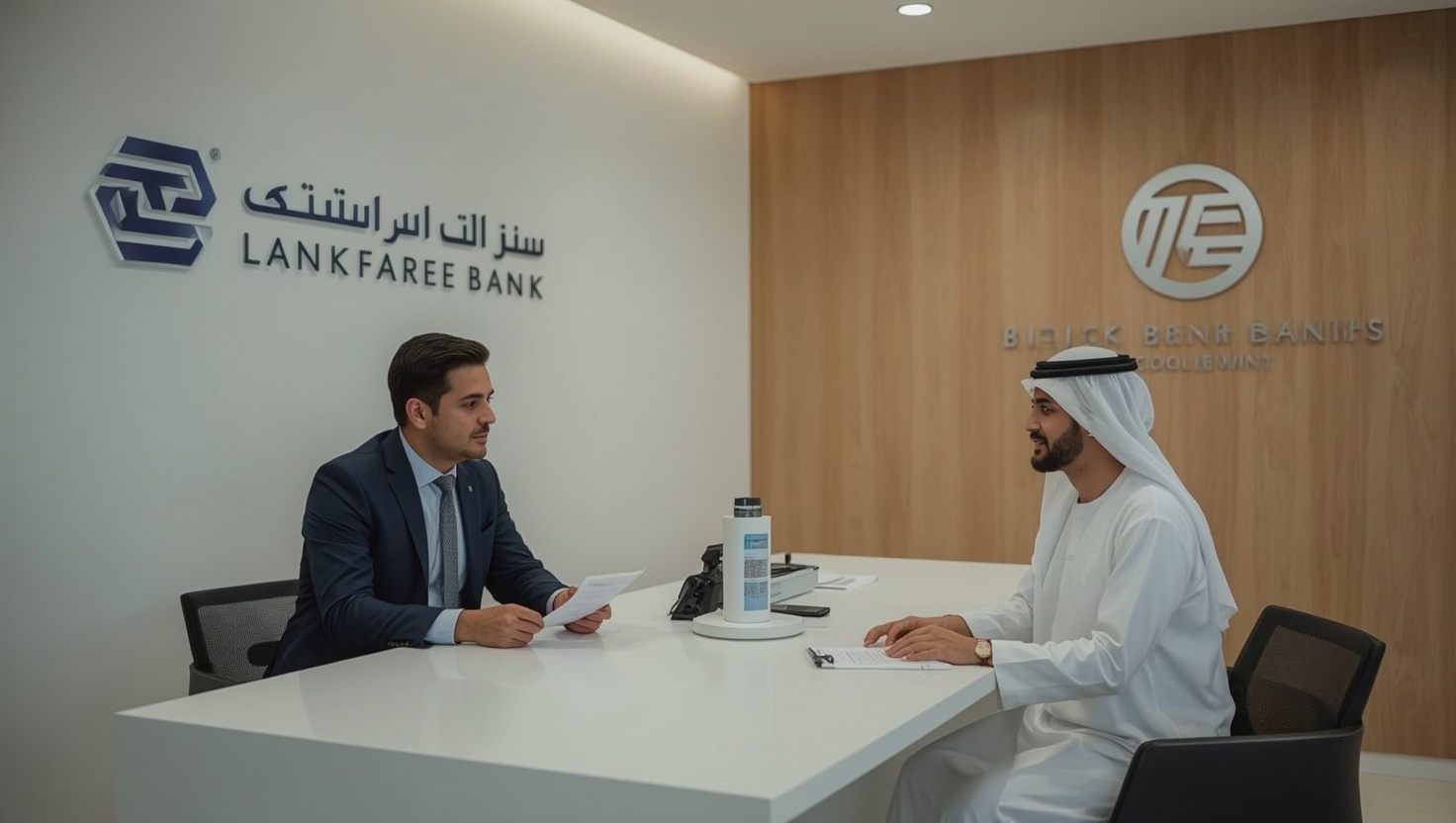
Opening a corporate bank account is the single slowest step in UAE company formation — taking 2 to 12 weeks depending on jurisdiction, entity type, and banking relationship. UAE banks have progressively tightened KYC requirements since 2024, and free zone companies face stricter scrutiny than mainland entities. The right bank, complete documentation, and an in-person KYC meeting are the three factors that determine whether account opening takes two weeks or three months. Last updated: June 2026.
For the UAE setup timeline, see how long does it take to set up a company in the UAE?. For the licence cost breakdown, see UAE business license costs: full breakdown by activity and jurisdiction.
How long does it take to open a UAE corporate bank account?
| Entity type | Expected timeline | Key factor |
|---|---|---|
| UAE mainland company | 1 to 4 weeks | Strongest banking relationships |
| DMCC, DIFC, or ADGM free zone | 2 to 4 weeks | Premium free zones have dedicated bank desks |
| Mid-tier free zone (IFZA, Meydan, RAKEZ) | 3 to 6 weeks | Banking introductions vary by zone |
| Budget free zone (Ajman, SPC, SHAMS) | 4 to 8 weeks | Sharjah/Ajman address adds friction |
| Offshore entity (RAK ICC, JAFZA Offshore) | 6 to 12 weeks | Highest KYC scrutiny, minimum balance AED 100K+ |
The variance is driven by two factors: the bank’s risk appetite for the entity type and the free zone’s banking relationships. DMCC and DIFC maintain dedicated relationship desks at major banks, shortening the process. Budget free zones often lack direct banking partnerships, forcing founders to apply independently.
Which UAE banks work best for new businesses?
Seven UAE banks actively serve new corporate accounts for foreign-owned entities:
| Bank | Strengths | Free zone friendly? | Minimum balance |
|---|---|---|---|
| Emirates NBD | Largest UAE bank, strong digital banking, broad free zone coverage | Yes — especially DMCC, DIFC | AED 25,000 to AED 50,000 |
| Mashreq | Fast onboarding, good for trading companies, Mashreq Neo digital | Yes — all major zones | AED 25,000 |
| RAKBANK | SME-focused, flexible requirements, competitive fees | Yes — DMCC, RAKEZ, IFZA | AED 10,000 to AED 25,000 |
| Commercial Bank of Dubai (CBD) | Competitive rates, good for mainland LLCs | Primarily mainland | AED 25,000 |
| HSBC | International banking, multi-currency, strong for trade finance | Yes — DIFC, ADGM, DMCC | AED 50,000+ |
| Standard Chartered | Wealth and corporate banking, strong DIFC presence | DIFC, ADGM primarily | AED 100,000+ |
| First Abu Dhabi Bank (FAB) | Largest by assets, strong Abu Dhabi presence | ADGM, Abu Dhabi mainland | AED 50,000 |
For most foreign founders incorporating a standard trading or service company, Emirates NBD, Mashreq, and RAKBANK offer the best balance of speed, cost, and acceptance. For regulated financial firms in DIFC or ADGM, HSBC and Standard Chartered are the natural choices.
What documents do banks require?
Every UAE bank requires the same core documentation package:
- Trade licence — original or certified copy
- Memorandum of Association (MOA) — notarised, showing shareholders and share distribution
- Passport copies — of all shareholders and authorised signatories
- Emirates ID — of at least one authorised signatory (requires a valid UAE visa)
- Proof of UAE address — Ejari or free zone tenancy contract
- Board resolution — authorising account opening and designating signatories
- Business plan — describing the company’s activities, target markets, revenue projections, and transaction volumes
- 6 months of personal bank statements — of all shareholders, from their home-country banks
The business plan is the document most founders underestimate. UAE banks use it to assess money-laundering risk and sanctions exposure. A clear description of the business, its clients, its supply chain, and expected transaction volumes accelerates compliance review.
What causes delays and rejections?
Five common reasons for corporate-account delays or rejections:
Incomplete documentation — missing a single document (especially attested MOA or personal bank statements) resets the review queue. Pre-assembling all documents before the KYC meeting saves 2 to 4 weeks.
High-risk activity codes — activities classified as high-risk under UAE AML/CFT regulations (money services, cryptocurrency, commodities trading with sanctioned-region exposure) trigger enhanced due diligence, adding 4 to 8 weeks.
Offshore or shell-company structures — banks view entities without real employees, real offices, or real UAE operations as higher risk. Demonstrating substance — a physical desk, at least one UAE-based employee, and regular UAE transactions — is the strongest signal.
Sharjah or Northern Emirates address — banks associate budget free zones with higher risk. An entity registered in Ajman or SHAMS faces more scrutiny than an identical entity registered in DMCC or DIFC.
Missing in-person KYC — UAE banks require at least one authorised signatory to attend an in-person meeting with the compliance team. Founders who cannot travel to the UAE should appoint a UAE-based co-signatory.
How can you speed up bank account opening?
Six steps to compress the timeline:
- Choose a bank-friendly free zone — DMCC, DIFC, ADGM have the fastest banking pipelines
- Pre-assemble all documents — have every required document ready before the KYC meeting
- Write a clear business plan — 2 to 3 pages describing activities, markets, and expected volumes
- Apply to 2 banks simultaneously — if the first bank delays, the second may approve faster
- Use the free zone’s banking introduction — DMCC, IFZA, and Meydan offer dedicated banking relationship officers
- Start the process early — begin the bank application in parallel with visa processing, not after
Frequently asked questions
Can I open a bank account without a UAE visa?
No. UAE banks require at least one authorised signatory to hold a valid UAE residence visa and Emirates ID. The signatory must attend an in-person KYC meeting. Some banks accept a visit-visa holder for initial application, but the account will not be activated until the residence visa is processed.
Can I use an international bank account while waiting?
Yes. Many founders use Wise Business, Payoneer, or Mercury as a temporary bridge while the UAE corporate account is being opened. These platforms process international payments and hold multi-currency balances, but they are not substitutes for a UAE corporate bank account for VAT registration, FTA compliance, and local credibility.
Do free zone companies need a UAE bank account?
Not technically — a free zone company can operate with an international bank account if all clients and suppliers are outside the UAE. However, VAT registration, FTA corporate tax filing, and UAE supplier payments all practically require a UAE corporate account.
Sources and further reading
- UAE Central Bank — AML/CFT framework and bank-licensing requirements
- Emirates NBD — Corporate account requirements (emiratesnbd.com)
- Mashreq — Business banking packages (mashreqbank.com)
- RAKBANK — SME account opening (rakbank.ae)
- DMCC — Banking relationship partnerships (dmcc.ae)