
QFZA operates two free zones in Qatar — Ras Bufontas (adjacent to Hamad International Airport) and Umm Alhoul (near Hamad Port) — offering 100 % foreign ownership, competitive tax rates, and direct access to Qatar’s logistics infrastructure. QFZA positions itself as the gateway for foreign companies serving Qatar’s USD 200+ billion infrastructure pipeline and the broader GCC market. Last updated: May 2026.
For the broader GCC free zone comparison, see GCC free zones explained: complete guide for foreign founders. For the GCC-wide setup context, see how to set up a business in the GCC: a complete guide for foreign founders.
What is QFZA?
The Qatar Free Zones Authority (QFZA) is the regulatory body established under Law No. 34 of 2005, as amended, to govern free zone operations in Qatar. QFZA differs from the Qatar Financial Centre (QFC) — which serves financial and professional services under English common law — by focusing on logistics, manufacturing, trading, and technology operations.
QFZA entities enjoy 100 % foreign ownership, 100 % profit repatriation, and exemption from import duties within the free zone. The corporate tax framework for QFZA entities is 0 % on qualifying free zone income, with a standard 10 % rate on Qatar-sourced non-qualifying income.
What are the two QFZA zones?
Ras Bufontas Free Zone
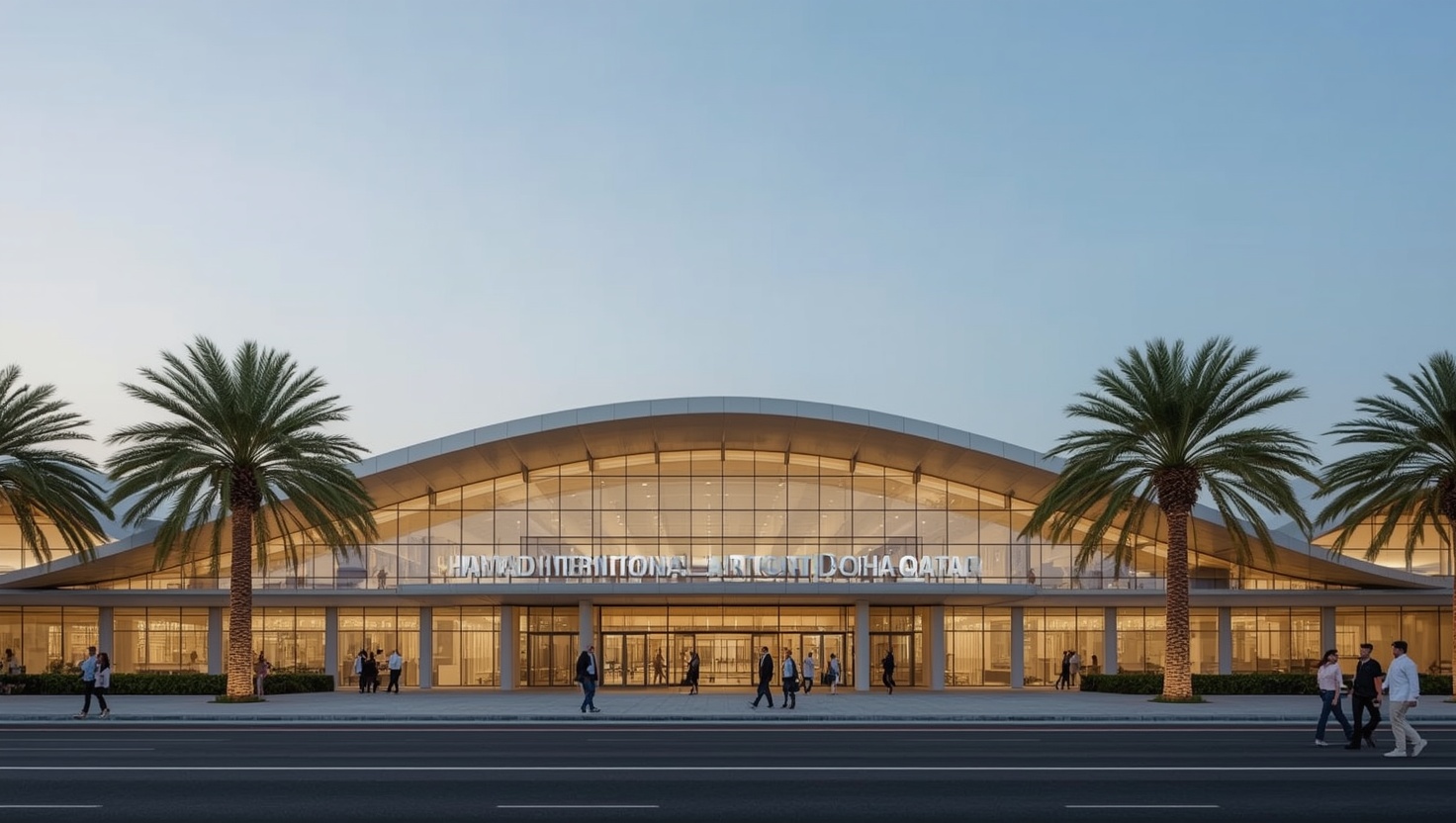
Ras Bufontas is located adjacent to Hamad International Airport, one of the world’s highest-rated airports and a major air-cargo hub. The zone serves companies in technology, logistics, light manufacturing, and professional services that benefit from air-freight connectivity.
Ras Bufontas offers purpose-built office space, warehousing, and light-manufacturing facilities. The zone’s proximity to Doha’s business district (15 minutes by road) makes it practical for companies that need both an operational base and regular access to Qatari government ministries and corporate clients.
Umm Alhoul Free Zone
Umm Alhoul is located adjacent to Hamad Port, Qatar’s deep-water container port and primary trade gateway. The zone focuses on heavy logistics, warehousing, manufacturing, and supply-chain operations that require port connectivity.
Umm Alhoul offers industrial land, large-scale warehousing, and container-handling infrastructure. The zone is designed for companies operating at scale — petrochemical processors, industrial-equipment manufacturers, and food-production facilities.
What does QFZA cost?
QFZA does not publish standardised pricing in the same way as UAE free zones. Licences are negotiated with the QFZA team based on the company’s activity, investment commitment, and space requirements. Indicative ranges from QFZA-registered formation agents:
| Component | Indicative range |
|---|---|
| QFZA licence (annual) | QAR 10,000 to QAR 50,000 (~USD 2,750 to USD 13,750) |
| Office space (Ras Bufontas, annual) | QAR 30,000 to QAR 150,000 |
| Warehouse (Umm Alhoul, annual) | QAR 80,000 to QAR 500,000+ (size-dependent) |
| Investor visa (per person) | QAR 3,000 to QAR 8,000 |
| Total first-year (office + 1 visa) | QAR 50,000 to QAR 200,000+ (~USD 13,750 to USD 55,000+) |
How does QFZA compare to QFC?
| Dimension | QFZA | QFC |
|---|---|---|
| Focus | Logistics, manufacturing, trading, technology | Financial services, professional services |
| Legal framework | Qatari civil law | English common law |
| Corporate tax | 0 % on qualifying FZ income; 10 % on non-qualifying | 10 % flat |
| Foreign ownership | 100 % | 100 % (guaranteed by QFC Authority) |
| Profit repatriation | 100 % | 100 % |
| Office location | Ras Bufontas / Umm Alhoul | QFC Tower, West Bay, Doha |
| Banking | Qatar National Bank, Commercial Bank of Qatar | QFC-licensed banks (international) |
| Setup speed | 2 to 4 weeks | ~15 days |
For financial-services companies, the QFC is the default choice. For logistics, manufacturing, and trading companies, QFZA provides the operational infrastructure and port/airport connectivity.
Who should choose QFZA?
Choose QFZA if you operate in logistics, manufacturing, or industrial trading and need direct access to Hamad Port or Hamad International Airport; if you serve Qatar’s infrastructure and construction sector; if you want a Qatar entity without QFC’s financial-services focus.
Do not choose QFZA if you are a consulting firm or financial-services company (QFC is purpose-built); if you need the cheapest GCC entry point (UAE free zones start lower); if you need a self-service digital portal (QFZA requires direct engagement with the authority team).
Frequently asked questions
Can QFZA companies sell to the Qatari mainland?
QFZA entities can sell to mainland Qatari customers under specific conditions approved by the QFZA. The restrictions are less rigid than in the UAE — QFZA’s regulatory framework permits more flexible mainland access, subject to individual licence terms.
Does Qatar have a QFZP-equivalent tax regime?
Qatar does not have a UAE-style QFZP regime. QFZA entities pay 0 % on qualifying free zone income by default, without the complex substance and activity tests required under the UAE’s Ministerial Decision No. 229 of 2025. Non-qualifying income is taxed at Qatar’s standard 10 % corporate tax rate.
How long does QFZA setup take?
QFZA licence applications are processed in 2 to 4 weeks from submission of complete documentation. Full setup including visa processing and office activation takes 4 to 8 weeks.
Sources and further reading
- QFZA — Official licensing framework and zone descriptions (qfza.gov.qa)
- Law No. 34 of 2005 (as amended) — Qatar Free Zones legal framework
- Qatar Financial Centre (QFC) — Financial and professional services licensing (qfc.qa)
- Hamad Port — Qatar’s primary deep-water trade gateway
- Hamad International Airport — Air-cargo hub connectivity