Saudi Arabia’s Special Economic Zones (SEZs) went live on 16 April 2026, unlocking the most aggressive tax package in the Kingdom’s history: a 5% corporate income tax rate for up to 20 years, zero withholding tax on dividends, 0% VAT on qualifying inbound supplies, and full customs relief on capital goods. Introduced by Cabinet Decision No. 468/1447 and administered by the Economic Cities and Special Zones Authority (ECZA), the SEZs form the operational backbone of Vision 2030’s push to attract USD 100 billion in annual foreign direct investment by 2030. This guide breaks down which zones qualify, what the incentives really mean, and how the SEZ regime compares to Saudi’s existing free zone and RHQ options.
What are Saudi Special Economic Zones?
Saudi Special Economic Zones are geographically or sector-defined areas where foreign investors receive a bundle of tax, customs, and regulatory concessions in exchange for locating high-value activities inside the Kingdom. Unlike the older DIFC or JAFZA free zones in the neighbouring UAE, Saudi SEZs sit under a single unified authority — the Economic Cities and Special Zones Authority (ECZA) — and each zone is anchored to a specific industrial vertical rather than serving as a general-purpose commercial free zone.
The framework was formalised through Cabinet Decision No. 468/1447, issued on 30 December 2025 and published in the Official Gazette on 16 January 2026. The bylaws became fully effective 90 days after publication, on 16 April 2026, and the Zakat, Tax and Customs Authority (ZATCA) issued detailed implementing rules in March 2026 to complete the framework.
Which four SEZs launched in 2026?
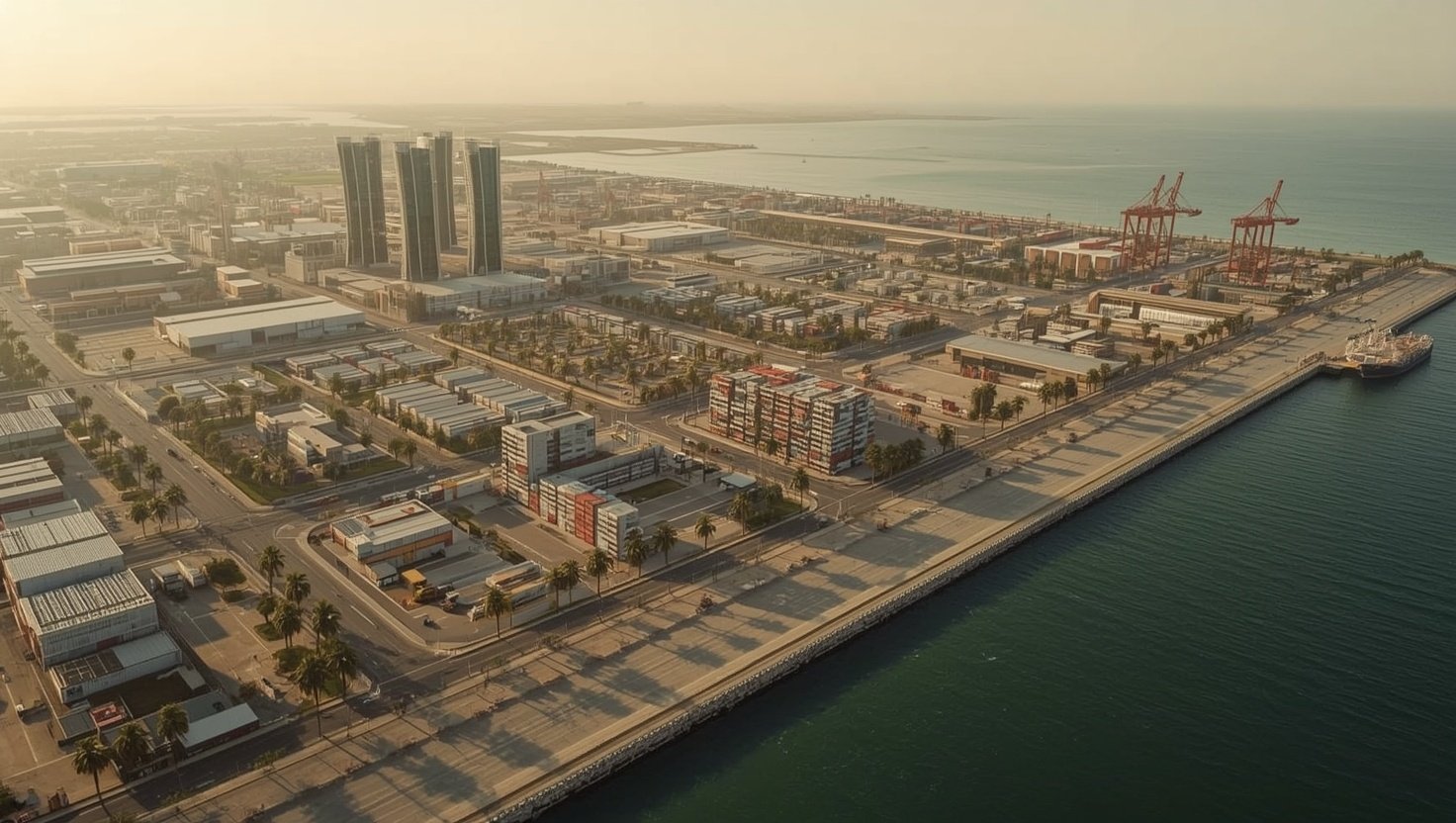
Four zones opened for investor applications under the new regime. Three are location-specific and one — Cloud Computing SEZ — operates as a distributed, Kingdom-wide model.
| SEZ | Location | Primary Sectors |
|---|---|---|
| King Abdullah Economic City (KAEC) SEZ | Rabigh, Red Sea coast | Automotive supply chain, pharmaceuticals, MedTech, logistics, light manufacturing |
| Ras Al-Khair SEZ | Eastern Province | Shipbuilding, offshore rigs, MRO, maritime industries |
| Jazan SEZ | South-western Saudi Arabia | Food processing, metals conversion, logistics |
| Cloud Computing SEZ | Kingdom-wide (distributed) | Data centre operations, hyperscale IT |
Each zone targets a specific industrial cluster that maps to Vision 2030 priority sectors. KAEC anchors the automotive push kicked off by the Ceer joint venture with PIF and Foxconn. Ras Al-Khair supports the Saudi Maritime Industrial Complex around Aramco and Bahri. Jazan builds out downstream metals and agro-processing capacity. The Cloud Computing SEZ is a regulatory innovation that lets hyperscalers such as AWS, Google, and Oracle operate distributed regions under a single tax and licensing wrapper.
What tax incentives do SEZ entities receive?
The headline number is the 5% corporate income tax rate, applied for up to 20 years to qualifying income generated inside the SEZ. Compared to the standard 20% CIT paid by foreign-owned entities on the Saudi mainland, this is a 75% tax reduction. On top of the CIT concession, SEZ entities benefit from:
- 0% withholding tax on dividends, interest, royalties, and management fees paid to non-resident shareholders (versus the standard 5% to 20% on the mainland).
- 0% VAT on qualifying goods and services supplied from other Saudi regions or imported from abroad, effectively creating a duty-free procurement channel.
- Full customs-duty exemption on capital equipment, machinery, and inputs required for licensed activities.
- 100% foreign ownership, in line with the Investment Law introduced by Royal Decree M/19 in February 2025.
- Streamlined labour rules, including flexibility on Nitaqat Emiratisation quotas during a defined ramp-up phase and expedited work-visa processing.
The Special Integrated Logistics Zone (SILZ) at Riyadh’s King Salman International Airport operates under a separate, even more generous regime — a 50-year 0% CIT designed exclusively for regional distribution, MRO, and light value-added manufacturing serving international trade. Investors should read SILZ and the four ECZA SEZs as parallel, not competing, tracks.
Who qualifies to set up in a Saudi SEZ?
Any legal entity engaged in an activity listed in the zone’s authorised business scope can apply, with no restriction on nationality of ownership. Applicants must commit to a minimum investment threshold set per zone (typically starting around SAR 5 million for light manufacturing and rising for capital-intensive activities) and demonstrate the technical capability to operate at the standard defined in the zone’s regulations. ECZA runs a two-stage licensing process: a preliminary approval based on a business plan and financial commitment, followed by a full operating licence granted after physical setup and staffing milestones are met.
Passive holding structures, real estate speculation, and activities already served by mainland licensing regimes (retail, hospitality) fall outside the SEZ perimeter. The Cabinet was explicit that the tax package is meant to attract productive, export-oriented activity — not to serve as a tax shelter for domestic income.
How do SEZs compare to Saudi free zones and the RHQ programme?
Investors evaluating a Saudi footprint often confuse three parallel regimes. Each targets a different profile.
| Feature | SEZ (ECZA, 2026) | Free Zones (existing) | RHQ Programme (2024) |
|---|---|---|---|
| Corporate income tax | 5% for up to 20 years | Varies by zone (typically standard CIT) | 0% CIT + Zakat exemption for 30 years |
| Foreign ownership | 100% | 100% | 100% |
| Minimum staff / commitment | Zone-specific investment threshold | Zone-specific | 15+ employees by year 1 |
| Target activity | Manufacturing, logistics, data centres | Sector-specific (mining, IT) | Regional HQ services |
| Government-contract eligibility | Case-by-case | No | Yes (mandatory from 1 Jan 2024) |
The RHQ programme suits multinationals that want to consolidate their MENA regional office in Riyadh to win Saudi government contracts. The SEZs suit operators building factories, logistics hubs, and data centres. Free zones remain a niche channel for specific verticals such as mining at Ras Al-Khair or Riyadh’s Digital Zone. Most large investors end up using two of the three in parallel — an RHQ in Riyadh for regional coordination and one or more SEZ subsidiaries for operations.
What is the setup process?
The typical path from decision to operational licence runs 8 to 16 weeks. Founders submit an expression of interest through ECZA’s portal, receive preliminary approval within 4 to 6 weeks, then execute a lease or land allocation inside the chosen zone. In parallel, the entity is incorporated under the Saudi Companies Law and registered with ZATCA under a dedicated SEZ tax number that unlocks the 5% CIT treatment automatically at filing time.
Investors should engage a Saudi tax advisor early to ring-fence SEZ-qualifying income from any mainland activity. Mixing the two inside one legal entity is possible but creates transfer-pricing exposure under ZATCA’s Transfer Pricing Bylaws, and most large investors keep a dedicated SEZ subsidiary to preserve audit clarity.